
by MyH Editorial Team | Mar 25, 2024 | Red Blood Cells
Key Takeaways Red blood cell morphology describes the size, shape, and color of red blood cells on a peripheral blood smear, and any deviation from the normal biconcave disc serves as a clinical clue to an underlying disease. Common abnormal red blood cell...

by MyH Editorial Team | Mar 21, 2024 | White Blood Cells
Key Takeaways Leukocytosis is a white blood cell (WBC) count above the normal range, usually >11 x 10⁹/L in adults. It is a clinical sign, not a disease in itself [1]. Causes ▾: The most common causes of leukocytosis are infection, inflammation, physical...

by MyH Editorial Team | Mar 19, 2024 | Red Blood Cells
Key Takeaways Drug induced immune hemolytic anemia (DIIHA) is a rare but important condition in which a medication prompts the immune system to destroy a person’s own red blood cells. Mechanism ▾: Three mechanisms explain most cases; the hapten model...
by MyH Editorial Team | Mar 15, 2024 | Red Blood Cells
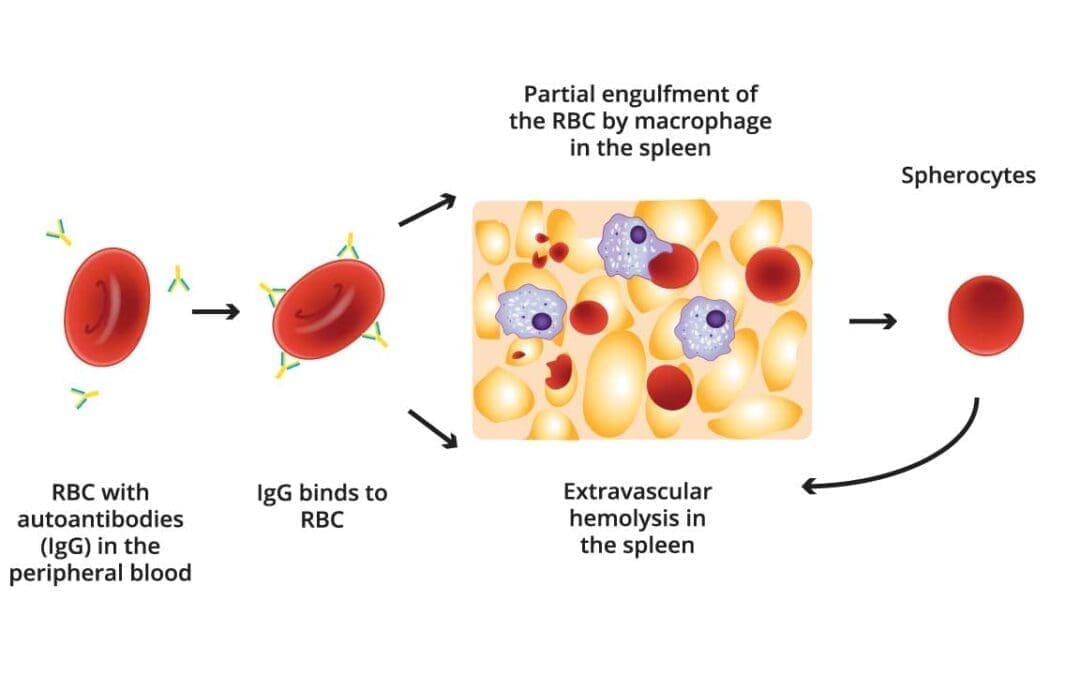
Key Takeaways Autoimmune hemolytic anemia (AIHA) happens when the immune system mistakenly attacks and destroys the body’s own red blood cells. Types ▾: There are two main forms; warm AIHA, driven by IgG antibodies active at body temperature, and cold...

by MyH Editorial Team | Mar 10, 2024 | Red Blood Cells
Key Takeaways Hemolytic anemia is a condition where red blood cells are destroyed faster than the bone marrow can replace them, leading to fatigue, pallor, jaundice, and sometimes dark urine. Types ▾: Hereditary (such as sickle cell disease, thalassemia,...

Recent Comments