
by MyH Editorial Team | Jun 27, 2024 | Red Blood Cells
Key Takeaways Folate deficiency is a lack of vitamin B9, a nutrient the body needs to make DNA, divide cells, and produce healthy red blood cells [1]. Symptoms ▾: The classic clinical picture is a megaloblastic anemia with fatigue, pale skin, glossitis (a sore...

by MyH Editorial Team | Jun 24, 2024 | Red Blood Cells
Key Takeaways Pernicious anemia is an autoimmune disease in which the immune system destroys the stomach’s parietal cells, blocking the production of intrinsic factor and causing vitamin B12 deficiency. Symptoms ▾: Typical features include macrocytic...

by MyH Editorial Team | Jun 22, 2024 | Red Blood Cells
Key Takeaways B12 deficiency is a lack of vitamin B12 (cobalamin) severe enough to disrupt DNA synthesis, red blood cell production, or nerve function. It causes megaloblastic anemia and, if untreated, lasting neurological damage [1,6]. Causes ▾: The two main...

by MyH Editorial Team | Jun 19, 2024 | Lab Protocols
Key Takeaways A blood tube is an evacuated (vacuum-sealed) container with a color-coded stopper also known as a vacutainer. The color tells you what additive is inside and what tests the tube is for. The most common blood tube colors are light blue (citrate, for...
by MyH Editorial Team | Jun 12, 2024 | Lab Protocols, Transfusion Medicine
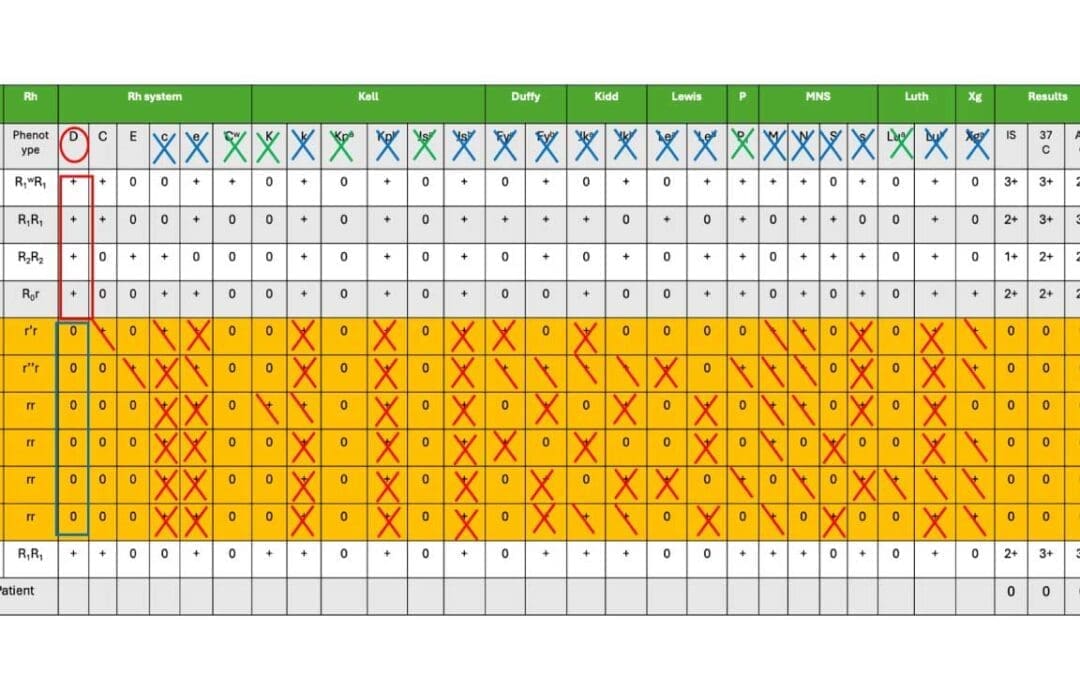
Key Takeaways An antibody identification antigram is a chart that shows which red cell antigens are present (+) or absent (0) on each reagent cell in a panel, allowing laboratories to identify an unknown red cell antibody. Interpretation works by inclusion and...

Recent Comments