by MyH Editorial Team | Jan 18, 2024 | Commentaries, rbc
Introduction SCD arises from a single nucleotide mutation in the beta-globin gene (HBB) on chromosome 11. This mutation leads to the substitution of valine for glutamic acid at the sixth amino acid position of the beta-globin chain in the hemoglobin molecule. This...

by MyH Editorial Team | Jan 16, 2024 | Lab Protocols, Red Blood Cells
Procedure At a Glance The sickle cell disease test (dithionite solubility test) is a fast, low-cost screening method that detects hemoglobin S (HbS) by turning cloudy when deoxygenated HbS forms polymers. Prepare fresh dithionite reagent (or reconstitute a commercial...

by MyH Editorial Team | Jan 11, 2024 | Hemostasis Disorders
Key Takeaways Fibrinolysis is the enzyme-driven process that dissolves a blood clot once it has done its job, restoring blood flow and preventing dangerous clot extension. Essential Players ▾: The central enzyme is plasmin, made on demand from circulating...
by MyH Editorial Team | Jan 8, 2024 | Hemostasis Disorders
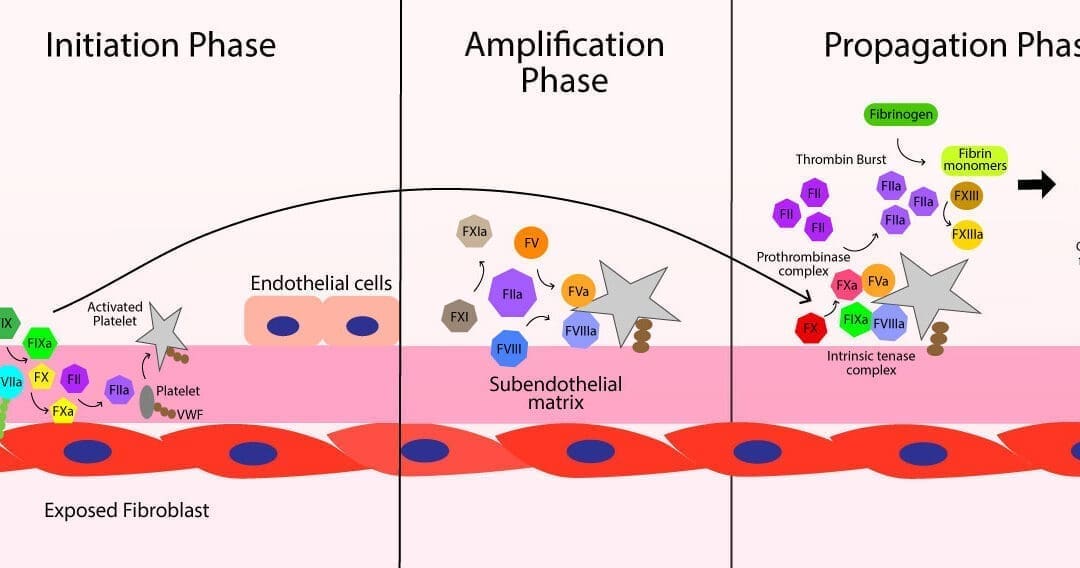
Key Takeaways The coagulation cascade is the second stage of hemostasis. Once platelets form their initial plug, clotting factors weave a fibrin mesh that locks the plug in place and seals the injury. Two pathways ▾: Two pathways feed into a common pathway. The...

by MyH Editorial Team | Jan 5, 2024 | Lab Protocols, Transfusion Medicine
Procedure At a Glance The indirect antiglobulin test (IAT), also called the indirect Coombs test, detects free IgG antibodies in plasma that could bind red blood cells [1,3]. Spin the patient sample to obtain clear serum or plasma. Prepare reagent red cells at a...

Recent Comments