
by MH Team | Apr 14, 2025 | White Blood Cells
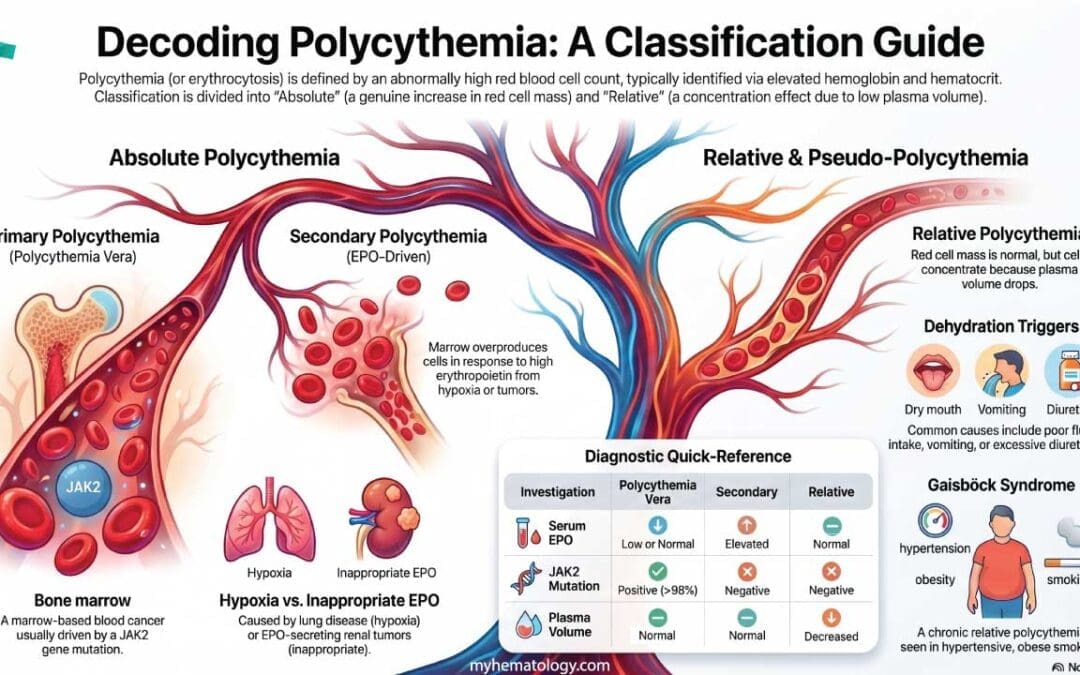
Key Takeaways Polycythemia means an abnormally high red blood cell count, reflected by raised hemoglobin and hematocrit on a full blood count. Classification ▾: There are three types; primary (polycythemia vera, driven by a JAK2 mutation), secondary (driven by...
by MH Team | Apr 11, 2025 | White Blood Cells
Key Takeaways Neutropenia is a quantitative deficiency of neutrophils, crucial for the innate immune system. Diagnosis relies on the absolute neutrophil count (ANC), classified by severity (mild, moderate, severe) and duration (acute, chronic). Causes ▾:...
by MH Team | Apr 9, 2025 | White Blood Cells
Key Takeaways Infectious mononucleosis is an acute viral illness (primarily EBV) with classic triad: pharyngitis, fever, lymphadenopathy. Epidemiology ▾: Common in adolescents/young adults, spread globally, primarily via saliva. Causes ▾: Primarily...
by MH Team | Apr 7, 2025 | White Blood Cells
Key Takeaways Eosinophilia is defined as more than 500 eosinophils per microliter (µL) of blood. It is a finding, not a disease, and signals that something, most often an allergy, parasite, drug reaction, or blood disorder, is driving the immune system [3]....
by MH Team | Apr 6, 2025 | White Blood Cells
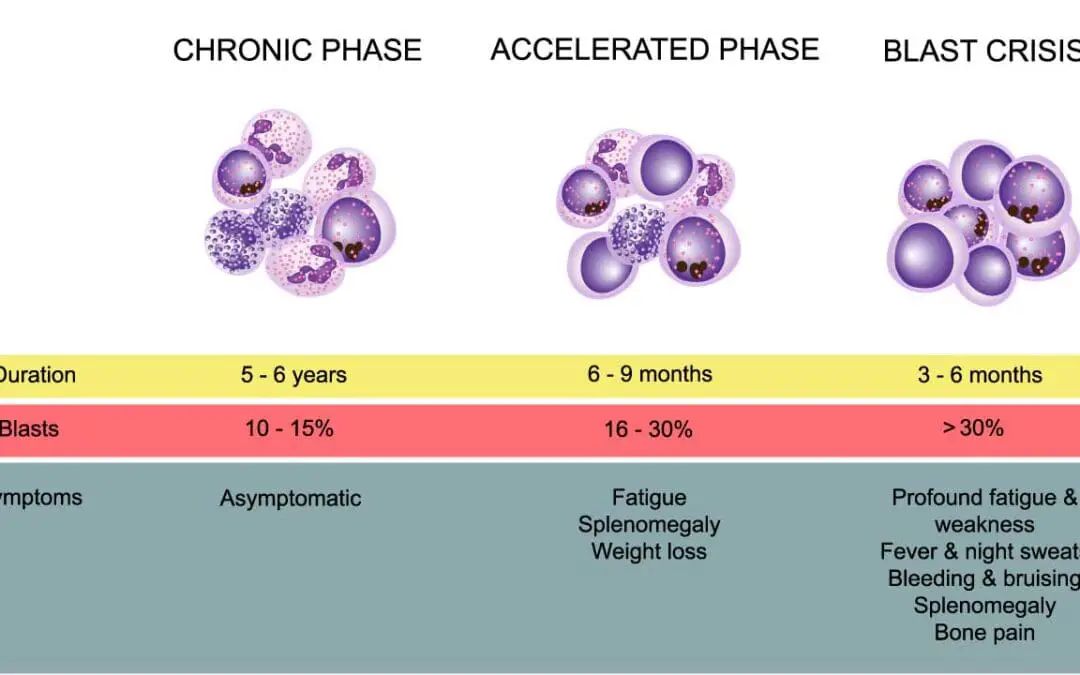
This blog post provides an overview of Chronic Myeloid Leukemia (CML) and its treatment strategies based on the most recent guideline (2025) from the National Comprehensive Cancer Network (NCCN). Key Takeaways Tyrosine kinase inhibitors (TKIs) are the primary...



Recent Comments